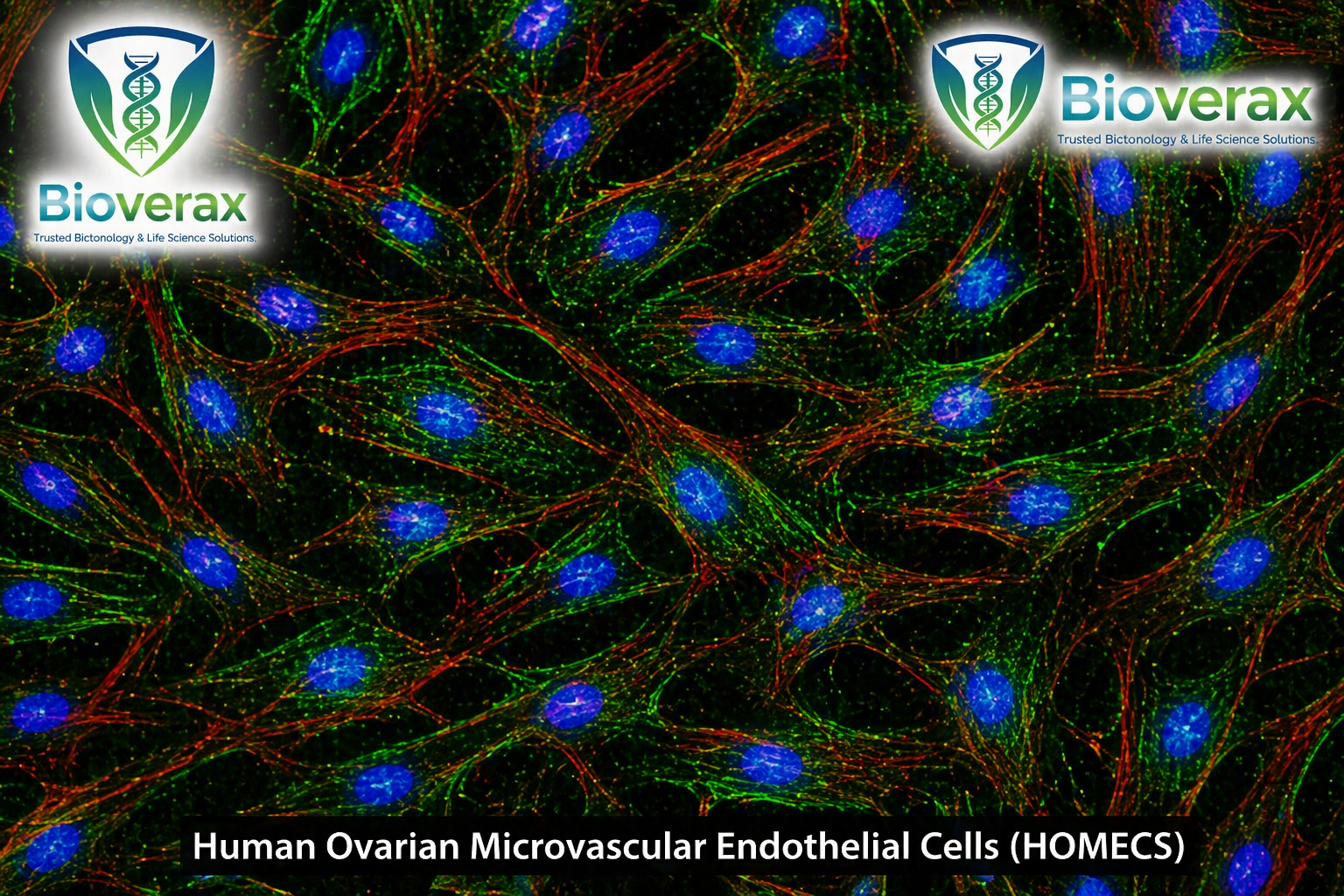
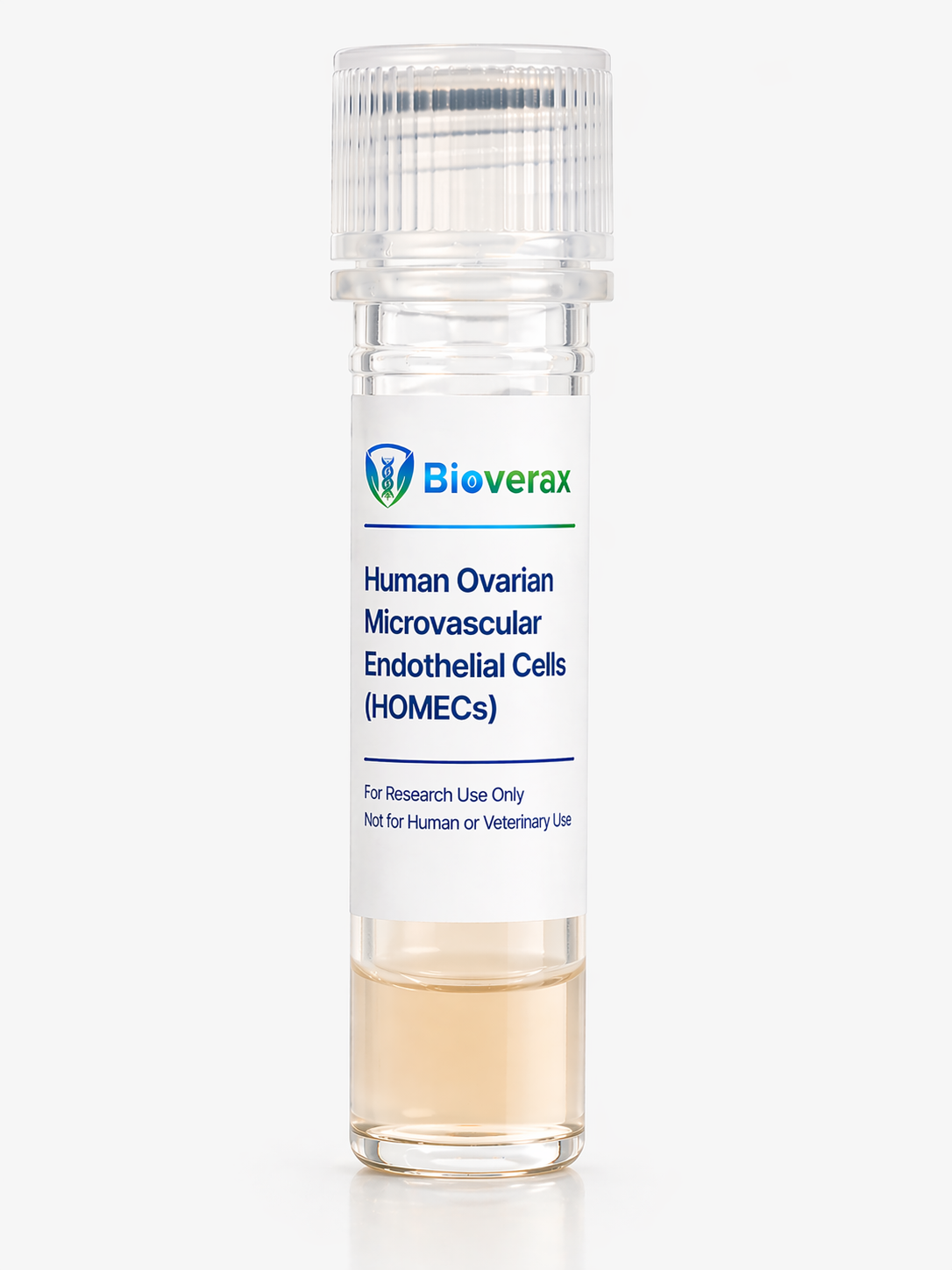
Human Ovarian Microvascular Endothelial Cells (HOMECs)
BVX015
Certified
QualityGlobal
ShippingSupport
24/7Datasheet
AvailableProduct Details
Size
Small
Product Code
BVX015
Product Data Sheet
Technical Documentation
Download detailed specifications, protocols, and safety information
File size: 2.9 MB
Quick Specifications
- Product Type: Human Endothelial Cells
- Storage: 37°C or liquid Nitrogen Vapor Phase Vapor Phase
- Shelf Life: N/A
- Catalog: BVX015
Human Ovarian Microvascular Endothelial Cells (HOMECs)
Product Description
Human Ovarian Microvascular Endothelial Cells (HOMECs) are specialized endothelial cells that line the tiny blood vessels within the human ovary's microvasculature. These cells are essential for supplying oxygen and nutrients to ovarian tissue, supporting normal reproductive function.
Key Features & Benefits
• Cobblestone-like endothelial appearance in culture
• Express markers such as CD31, VE-cadherin, vWF, VEGFR
• Respond strongly to estrogen, progesterone, and VEGF signaling
• Endothelial cells display a cobblestone-like appearance in culture.
• They express markers such as CD31, VE-cadherin, vWF, and VEGFR.
• These cells respond strongly to estrogen, progesterone, and VEGF signaling.
Quick Facts
Product Type
Human Endothelial Cells
Viability
High viability
Storage
37°C or liquid Nitrogen Vapor Phase Vapor Phase
Shelf Life
N/A
Applications
Technical Specifications
| Product Type | Human Endothelial Cells |
|---|---|
| Genetic Modifications | These cells are widely used in studies of: • Immune system function • Tonsillitis and throat inflammation • Infection response mechanisms • Endothelial cell biology • Leukocyte adhesion and migration In Cell Culture: Scientists use Human Tonsil Microvascular Endothelial Cells to study: • Immune cell trafficking • Cytokine signaling • Inflammatory responses • Vascular permeability • Drug testing for inflammatory diseases Human Tonsil Microvascular Endothelial Cells are widely utilized in various studies, including: - Immune system function - Tonsillitis and throat inflammation - Mechanisms of infection response - Endothelial cell biology - Leukocyte adhesion and migration In cell culture, scientists specifically use these cells to investigate: - Immune cell trafficking - Cytokine signaling - Inflammatory responses - Vascular permeability - Drug testing for inflammatory diseases |
| Storage Conditions | 37°C or liquid Nitrogen Vapor Phase Vapor Phase |
| Shelf Life | N/A |
| Product Code | BVX015 |
| Size/Format | Small |
| Category | Primary Cells |
Primary Applications
Applications & Use Cases
Primary Applications
These cells are widely used in studies of: • Ovarian angiogenesis (new blood vessel formation) • Fertility and reproductive biology • Polycystic ovary syndrome (PCOS) • Ovarian cancer research • Hormonal regulation of blood vessels In Cell Culture: Scientists use Human Ovarian Microvascular Endothelial Cells to study: • Hormone signaling effects • Endothelial growth and migration • Vascular permeability • Cell interactions with granulosa and stromal cells • Drug testing for reproductive health research
Suitable for these cells are widely used in studies of: • ovarian angiogenesis (new blood vessel formation) • fertility and reproductive biology • polycystic ovary syndrome (pcos) • ovarian cancer research • hormonal regulation of blood vessels in cell culture: scientists use human ovarian microvascular endothelial cells to study: • hormone signaling effects • endothelial growth and migration • vascular permeability • cell interactions with granulosa and stromal cells • drug testing for reproductive health research studies and research applications
Research Use Cases
In Vitro Studies
Cell culture and screening applications
Molecular Biology
Gene expression & signaling studies
Drug Discovery
Screening & validation studies
Technical Support & Documentation
Technical Support
Our experts are available for technical questions and protocol assistance.
Contact Support