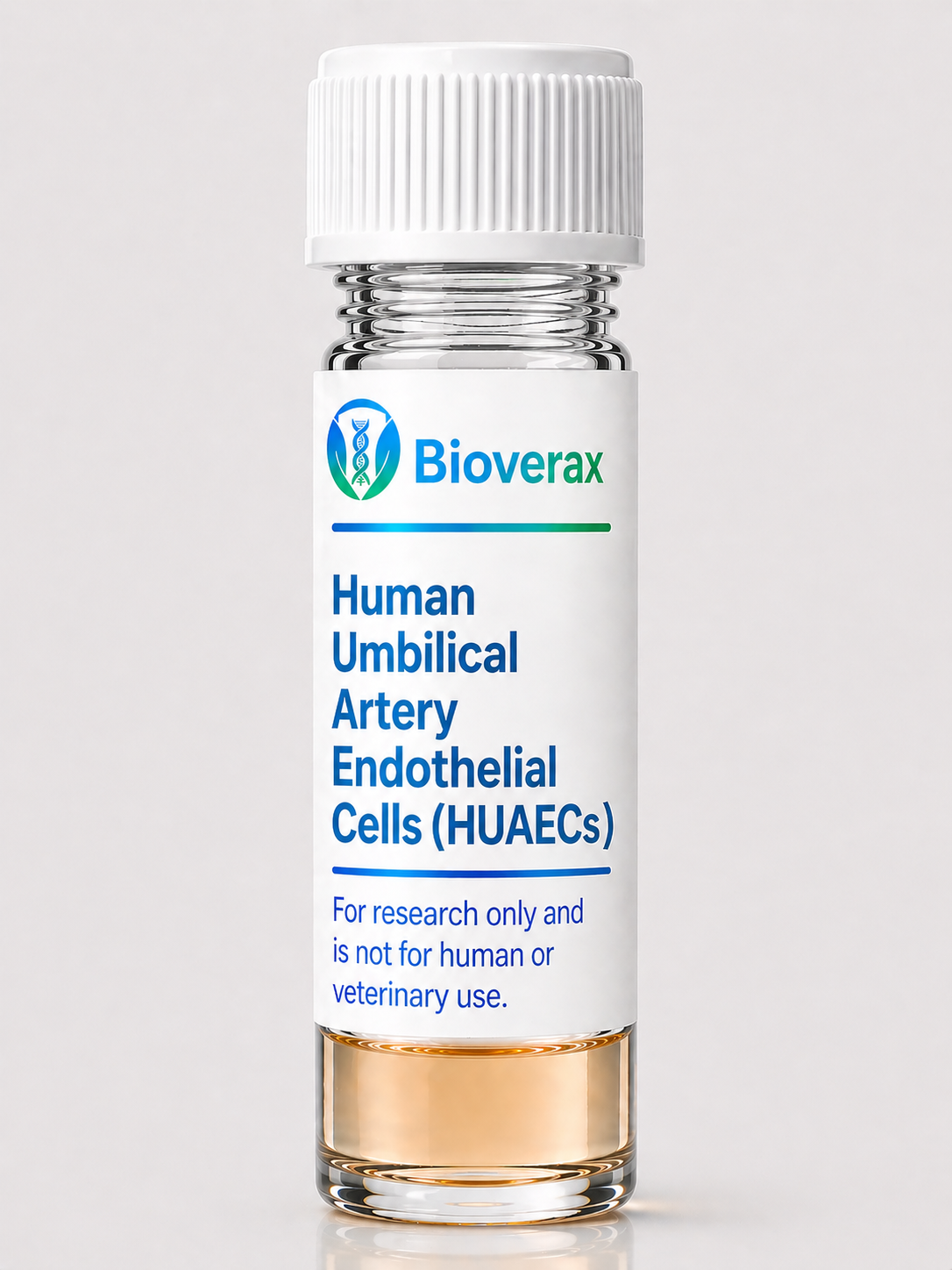
Human Umbilical Artery Endothelial Cells (HUAECs)
BVX-0113
Certified
QualityGlobal
ShippingSupport
24/7Info
IncludedProduct Details
Size
1ml
Product Code
BVX-0113
Quick Specifications
- Product Type: Human Endothelial cells
- Storage: Store in liquid nitrogen vapor phase (-196°C) for long-term. Ship on dry ice (-80°C).
- Shelf Life: Very stable in the Liquid Nitrogen Vapor Phase
- Catalog: BVX-0113
- Growth: Primary cells capable of multiple passages when using recommended medium and proper handling
Human Umbilical Artery Endothelial Cells (HUAECs)
Product Description
Human Umbilical Artery Endothelial Cells (HUAECs) are primary endothelial cells isolated from the umbilical artery of human umbilical cord tissue. These cells line the inner surface of the umbilical artery and play essential roles in fetal circulation, vascular tone regulation, nutrient transport support, angiogenesis, inflammation responses, and vascular homeostasis. They exhibit characteristic endothelial cobblestone morphology and grow as adherent monolayers under optimized culture conditions. These cells are widely used in vascular biology research, developmental biology studies, pregnancy-related research, endothelial signaling studies, and drug discovery applications.Human Umbilical Artery Endothelial Cells (HUAECs) are primary endothelial cells that are isolated from the umbilical artery of human umbilical cord tissue. These cells line the inner surface of the umbilical artery and play crucial roles in fetal circulation, regulating vascular tone, supporting nutrient transport, promoting angiogenesis, responding to inflammation, and maintaining vascular homeostasis. HUAECs exhibit a characteristic cobblestone morphology and grow as adherent monolayers under optimized culture conditions. These cells are widely utilized in research areas such as vascular biology, developmental biology, pregnancy-related studies, endothelial signaling, and drug discovery.
Key Features & Benefits
• Cell Type: Human Umbilical Artery Endothelial Cells (HUAECs)
• Species: Human
• Tissue Origin: Umbilical artery
• Morphology: Typical endothelial cobblestone morphology
• Growth Characteristics: Adherent monolayer culture
• Recommended Medium: Endothelial Cell Growth Medium
• Cryopreservation Format: Frozen vial
• Viability: High post-thaw viability
• Markers: CD31, VE-Cadherin, vWF, eNOS
• Quality Control: Sterility tested, mycoplasma negative, identity verified
• Passage: Low passage recommended
Quick Facts
Product Type
Human Endothelial cells
Viability
High viability
Storage
Store in liquid nitrogen vapor phase (-196°C) for long-term. Ship on dry ice (-80°C).
Shelf Life
Very stable in the Liquid Nitrogen Vapor Phase
Applications
Technical Specifications
| Product Type | Human Endothelial cells |
|---|---|
| Proliferative Capability | Primary cells capable of multiple passages when using recommended medium and proper handling |
| Storage Conditions | Store in liquid nitrogen vapor phase (-196°C) for long-term. Ship on dry ice (-80°C). |
| Shelf Life | Very stable in the Liquid Nitrogen Vapor Phase |
| Product Code | BVX-0113 |
| Size/Format | 1ml |
| Category | Primary Cells |
Primary Applications
Applications & Use Cases
Primary Applications
• Vascular biology research • Developmental biology studies • Pregnancy-related research • Angiogenesis assays • Endothelial signaling studies • Drug screening and toxicology • Cell migration and proliferation assays • Inflammation studies • Tissue engineering • Regenerative medicine
Suitable for • vascular biology research • developmental biology studies • pregnancy-related research • angiogenesis assays • endothelial signaling studies • drug screening and toxicology • cell migration and proliferation assays • inflammation studies • tissue engineering • regenerative medicine studies and research applications
Research Use Cases
In Vitro Studies
Cell culture and screening applications
Molecular Biology
Gene expression & signaling studies
Drug Discovery
Screening & validation studies
Technical Support & Documentation
Technical Support
Our experts are available for technical questions and protocol assistance.
Contact Support